

SICILIA IN 10 DAYS
In a country that certainly makes it difficult to narrow down travel destinations, few places in Italy offer the cultural, linguistic, culinary, and natural beauty of Sicily. From Palermo's busy marketplaces that conjure hints of North Africa to the Temples of Agrigento and Selinunte that rival those in Greece, to Mount Etna's eclectic mix of Italian hikers and experimental biologic wine-enthusiasts, you will part for home after ten days promising to return. Sicilian culture is different from the mainland, and locals pride themselves on being a distinct breed born out of a geographic and cultural melting pot. Don't expect to eaves drop using your new Italian language skills that you polished up for the voyage-- while nearly every Sicilian will understand standard Italian, amongst themselves they use various dialects of their own Sicilian language, one that has few similarities to the tongue adopted by the modern Republic.
My trip began in Palermo and followed a counter-clockwise path around the perimeter of the island. I rented a Fiat 500, which not only made me feel in place with the locals, but was absolutely the best method of travel. I strongly recommend driving as the method of transportation in Italy. While some parts of the north have excellent public transportation, the south with its "Dolce Vita" emphasis and sprawling landscape leaves something to be desired for the public busses and trains. For someone who already carries a heavy bias that there is no better country to pass the time than Italy, Sicily had me falling in love with my favorite place all over again.
DAY 1: PALERMO
I could write an entire 10 days on what to do just in Palermo (and I will) but for the purposes of this quick Sicilian itinerary I will keep it short and sweet.
ACCOMODATION: AirBnb is the way to go in Palermo with many great options with bohemian, North African-inspired tapestries to balconies with sweeping views. Grand Hotel Palme offers a clean, charming hotel near the northern district of the city, a 15 minute walk away from the hustle and bustle near the shops and markets, but very close by to the theaters. La Maison del Sole is a quaint, clean, and spacious B&B in the heart of Palermo that is perfect for the middle of the road option. If you aren't on a strict budget, some of the city's most luxurious accommodations are just at the outskirts of the city at the famous Rocco Forte property, Villa Igiea or Gran Hotel et Des Palmes, in the northern quarter of the city near the theater district.
MORNING: Stroll though the markets as they open in the morning and stop for an espresso and
a famous Sicilian pastry that will fuel you for the day ahead. For a taste of the cultural
melting pot so characteristic of Sicily and truly nowhere else in Italy, saunter through
Mercato Ballaró. Alternatively, the Mercato del Capo (Ke Palle specifically is fantastic for classic Palermitano fried street food) and Mercato Vucciria are more centrally located, but if you're tight on time definitely save La Vucciria for the evening when it comes alive as Palermo's biggest movida (Translation: after-dinner outdoor street party). If you’re trying to fit in a cultural activity before your long, leisurely Sicilian lunch, consider visiting San Giovanni degli Eremiti, one of the most famous of the Norman churches in all of Italy. With its distinct red domes and internal fruit garden, and jungle gym-like stairs, the rooftop city views are a spectacle that you won't want to miss.
LUNCH:
-
Trattoria al Vecchio Club Rosenaro
-
'Nni Franco u' Vastiddaru
AFTERNOON: If you lunch ends before your dinner reservation begins, we recommend visiting the Chiesa di San Caterina. This is the second most famous church in the city only to the Cattedrale di Palermo, but thanks to a little operation inside called I Segreti del Chiostro (Secrets of the Cloister) it’s our favorite. Overlooking the dramatic Fontana Pretoria, you slip through a small door into a room filled with ornate, colorful Sicilian pastries made with love by the nuns of this congregation for your snacking pleasure on the ascent up to the cathedral’s dome. This is truly the ideal spot to watch the sun sink below the rugged Sicilian landscape while enjoying your freshly ricotta-filled cannolo.
(Pre-trip history homework about these irresistible sweets...
https://www.bbc.com/travel/article/20210113-the-erotic-origins-of-italys-most-famous-sweet)


APERITIVO: The aperitivo is unquestionably the most anticipated, loved, and admired of the Italian culinary traditions. Stick with the classic Aperol Spritz or be a little adventurous with my favorite Sicilian beer, Birra Messina or another one of the artisanal beers offered at Taverna Celso. And of course, if your aperitivo turns somehow into an "Apericena" (the term for happy hour so long it becomes a dinner or "cena"), not to worry, the southern Italians not only accept, but encourage meals that last all day and long into the night!
-
Enoteca Picone
-
Taverna Celso
-
Enoteca Buonvini
-
Bisso Bistrot
DINNER: If you are expecting the traditional pasta al pomodoro, Sicilian cuisine will throw you for one of the most surprising and impressive twists. Rooted in the maritime culture on which the island thrives, Sicilian cooking is seafood forward with langoustine, mussels, and various local fish as the main event. fried preparations of absolutely everything from the well known Arancini to deep fried chickpea fritters or Panelle are a must, and usually are a substitute for the usual bread and olive oil prior to the meal.
-
Funnaco PizzaLab
-
Osteria Mercede
-
Altri Tempi
-
Osteria al Ferro di Cavallo
-
Locale
-
Osteria Lo Bianco
AFTER DINNER: Sicilian liquors, or "digestivi", are celebrated across the island and rooted in familial traditions of making herbal mixtures into eclectic beverages or straight. The beloved Amaro Amara from Sicliy’s Etna region is a good place to start if you’re new to the liquori game. Oh, and Parmitani love to party, so don’t be surprised if you bump into a DJ in the piazza with a flash mob – like party of young Sicilians – on a Monday.
-
Bar Garibaldi
-
Basoli
-
Mercato Vucciria
DAY 2: PALERMO TO SCOPELLO

MONDELLO
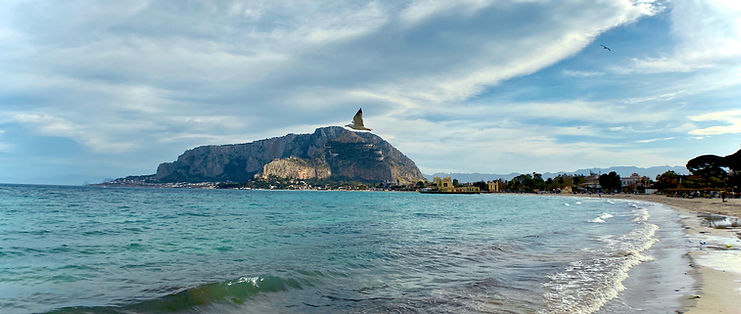
Leaving Palermo behind and winding around the looming Montepellegrino, the first of many scenic beaches is only a 25 minute drive from the city center. Once an exclusive weekend escape for aristocratic Palermitani, modern-day Mondello is home to a limoncello-colored Art Nouveau fortress, Stabilimento Balneare, that evokes a distinct tone of Italian nostalgic luxury.
If you are an early riser, take a detour to the top of Montepellegrino along the way to catch a breathtaking view of the untamed city of Palermo, the pristine beaches of Mondello, and if you're lucky, the Isole Eolie that can occasionally be seen on the horizon on a clear day. Once you make it to Mondello, there are few activities to be had with the exception of buying a 10 euro tapestry and rolling it out on the crisp white sand to abbronzarsi ("soak up some rays") while admiring the unique little cove.
If you have an entire day dedicated to the area surrounding Palermo, we recommend taking the morning to see sites in the city that you may have missed and head toward the beach in the afternoon. Stop at Sariddu Mondello or L'Angolo di Mondello for a fresh, casual seafood lunch by the sea, but if you are looking for something more upscale make a reservation for Byebyelues, Mondello's Michelin starred joint. Though scenic, Mondello is known for its perfect conditions for water sports, so if you are seeing a bit of adventure, try windsurfing or kayaking in the calm bay. If you're continuing on your tour of the island, continue taking the highway westward and make your way to Scopello.
CASTELAMMARE DEL GOLFO AND SCOPELLO
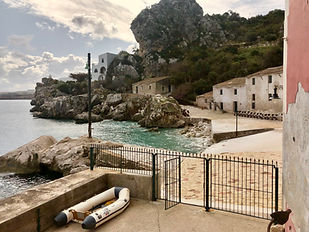
As you wind along the northern coast of Sicily the zone of Castelammare del Golfo and La Riserva Naturale dello Zingaro (Natural Reservation of Zingaro), you begin to notice the landscape mimicking the thread of juxtaposition in Palermo and Mondello: utamed beauty.
ACCOMODATION: The famous Tonnara di Scopello is the ideal place to stay if available and you are planning to stay in the area overnight. The effortlessly charming apartments (of which there are 12) offer an experience rooted in histoy that is now a luxury destination for those in the know. While it won't be you most wallet-friendly accommodation on the trip, we felt that waking up in the Tonnara is actually a part of the cultural experience of visiting this town, and well worth the extra investment. You can find booking information here.
MORNING: A tour of the Tonnara di Scopello is an absolute must, and since you will be waking up there, it's wise to ask for an early morning booking. This site is rooted in the tradition of tuna fishing, a history and skill in which the Sicilians take great pride. During our visit, the tour guide described a symbiosis that the Sicilians believe exist between the tuna and the people, one in which the tuna is revered and believed to obey the pescatori (fishermen) in order to sacrifice itself to feed the population. The tonnara served as a small community and contains apartments (which are now a hotel available for booking), a chapel, a large kitchen and a piazzetta in the center where the fishermen would gather and live in between weeks long tuna fishing voyages. The museum is outshined only by the tour guides who are not only knowledgeable, but very proud to share this unique history with visitors. And of course, the shabby chic and unimaginably scenic beach at the tonnara deserves your lounging for at least an hour before sauntering to a spritz-soaked seafood lunch.
LUNCH: Depending on the afternoon plans, lunch may either be in Scopello after the tour of the Tonnara or in San Vito Lo Capo, the aquamarine crown jewel at the tip of the cape hosting the Natural Reserve of Zingaro.
-
Bar Nettuno (Scopello)
-
Syrah (SVLC)
AFTERNOON: San Vito Lo Capo and the surrounding hiking trails.
DINNER: After a few hours of hiking or lounging on the beach, the perfect end to the evening can be found at a few restaurants either in San Vito Lo Capo or back toward the highway in Castelammare del Golfo.
-
Il Pocho (SVLC)
-
La Tonnara (Castelammare del Golfo)


DAY 3: SCOPELLO TO MARSALA
As I was eager to continue along the road in order to reach the south eastern corner of the island with plenty of time to explore the famous Baroque cities, I backtracked to the highway and continued along the road to Trapani and Marsala rather swiftly. My only stop was the hilltop town of Erice to experience the storied pastries of Maria Grammatico and take in the bird's-eye view of the port of Trapani and the Sicilian salt pans. I decided to continue directly to Marsala, as Trapani would have meant another night sleeping on this side of the island, but I will for sure be back to revisit the area in the summer months when tips to the nearby islands "Isole Egadi" of Favignana, Marettimo and Levanzo are more accessible by ferryboat.
ERICE
Erice is a medieval town perched atop a mountain on the Western coast of Sicily overlooking the city of Trapani, most famously known for its salt flats. Don't expect to find a bustling crowd, the winding road to the 750m peak where the historic city is strategically placed can be an easily missed turn off of the autostrada. Quaint and quiet as it may be, there are a few gems in Erice that shouldn't be missed and the view alone is worth setting aside a morning along your route.
BREAKFAST: Said to be home to the world's best pasties, La Pasticceria Maria Grammatico was born out of a story of hunger and poverty. During the Second World War, a young Maria Grammatico was an orphan who was taken in by the Convento San Carlo and taught in the Sicilian tradition of confectionery that is found in convents throughout the island. Day after day, she passed the time in the strict and demanding nunnery by watching and learning from others how to bake the sweet and colorful delicacies. If you're fortunate enough to encounter the 80-year-old Maria, stop to ask her the secret ingredient is that she uses in her perfect almond-based pastries. Her response will certainly be one word: L'Amore.
Practice your Italian (or use the google translate function of chrome!) and read more here about Maria Grammatico and her rise to biscotti royalty in Vanity Fair Italia.
MORNING: It takes mere seconds upon entering the church to understand why visitors marvel at the Duomo di Erice to recognize that this is no ordinary church (to be fair, what church in Italy is ordinary). Upon entering, gaze toward the ceiling to find the impressively intricate carved marble that graces the entirety of the central nave. The age of the building is obvious from the stylistically mismatched interior, watchtower, and entrance as well as the missing facade, but the original foundation was a gift from the Sicilian King Federico III to the people of Erice for housing and welcoming him during his swift escape from Palermo.
MARSALA
You may have heard "Marsala" as a part of a dish that no one in Sicily will recognize (and one you should not admit knowing if you are trying to blend in with the locals). Yes, we are alluding (quietly) to Chicken Marsala, an Italo-American dish that utilizes Marsala wine as a marinade, and practically ruined the reputation of the region's wine as a sweet, after-dinner delicacy. Here, you will find a dynamic city that is a mixture of the ages: a lone theater in the architectural style of "Futurismo" reminiscent Fascist-era Italy, a piazza in the city center housing the impressive baroque cathedral, and toward the water, an archaeological park that is home to the ancient city of Lilibeo, first build in 397 A.C.
AFTERNOON/LUNCH: Wine tasting at Cantine Florio is a must-see while visiting Marsala. The historic winery lies on the outskirts of the city facing toward the sea. While the view outside of the gates is somewhat generic, upon entering the compound, you will find yourself in an oasis speckled with palm trees and a regal white building accented in yellow and seemingly touts the prestige of the product. Aside from the impressive facilities, the visit was informative and educational, revealing the complex history of Marsala wine and uncovering the true intended use for the beverage as a sweet wine for post-dinner socializing. The cantine themselves are a work of art, and the visit is truly an experience that wouldn't be complete without the temptation to purchase not only the wine, but also the famous Florio posters for the playful marketing campaign.
DINNER
-
La Corte dei Mangioni
ACCOMODATION: We opted for a B&B in Marsala called Il Profumo di Sale, a clean, welcoming establishment in a prime location in the city center. Celsa, the owner and greatest asset of the accommodation, is full of knowledge and recommendations for the city that you simply can't find in a guide book. We have her to thank for our Marsala experience, and will certainly return for a visit in the near future.


As we rounded the western point of Sicily, we stopped to take in the view toward the islands. On one account, our choice (or lack thereof) that I was working in Palermo during bassa stagione (low season) was a blessing and a curse. In the quiet months of the Sicilian winters, reservations are abundant, the weather is mild enough to be outdoors, and the local experience is on full display without the pomp and circumstance of the tourist-flooded Italian Summer. On the other hand, the island was simply designed for the long, lazy days between June and Ferrogosto (August 15). Sicilian culture thrives on the rays of the sun and the locals live for the sweltering days spent with friends and family in small flocks of boats parked in calette (small, secluded beaches often only reachable by water) drinking Messina beer. All of this is to say, while we loved our first introduction to Sicily, there were so many places unreachable or shuddered in the winter months like the islands we gazed upon from the rocky port of Marsala. There's no bad time to visit, just recognize that the winter may limit your options for seasonal locales, and the summer is inundated with tourists chasing the dolce vita.


DAY 4: MARSALA TO AGRIGENTO
SELINUNTE
MORNING: Heading south, it becomes impossible to ignore the Grecian influence on Sicilian architecture. Once an important Greek colony, Selinunte is home to some of the world's most well-preserved greek temples in an expansive archeological park overlooking the Mediterranean. With this destination in mind, we left Marsala and made a quick stop along the way in Castelvetrano, famous for its buttery green olives, but otherwise a humble town with few sites to see. If you have the time, there are several frantoi (olive-oil mills) that you can tour and plan an olive oil tasting if you're interested.
LUNCH:
-
Lido Zabbara for a beach lunch in the Riserva Naturale Focce del Fiume Belice e Dune Limitrofe
AFTERNOON: Take the afternoon to explore the massive temples and walk around the archaeological park. More so even than the neighboring Valle dei Templi at Agrigento, there are few rules and restrictions here; you are essentially free to explore, lounge, and roam at will. This allows fo the awe-inspiring experience of understanding the sheer magnitude of these ancient structures, and allows you to imagine them in their full glory as a part of the Greek Empire. We took the afternoon to bring our trusty tapestry from Mondello and soak in the history that surrounded us.

AGRIGENTO: While Selinunte is the wildflower of the Sicilian temples with its untamed beauty and no-frills experience, Agrigento is the cultivated orchid. That is not to say the temples are more impressive, in fact they are quite a bit smaller but perhaps slightly more well-preserved. The Valle dei Templi has gained the most notoriety in Sicily for its impressively well kept structures, and offers quite a bit more of an experience with nicely paved paths, a small museum, and the option to have a guided tour of the grounds.
APERITIVO: A difficult aperitivo to surpass, this is what I like to call happy hour with a view. Returning to my Fiat 500, I drove along the southern coast to the Scala dei Turchi, a beach not far from the city of Agrigento known for the glistening marble "staircase" that beckoned foreign travelers from far off places (Turchi in Sicilian historically refers to anyone form the Middle East or North Africa) to ascend onto the island. The natural phenomenon is reached by parking your car along the roadway and walking down an unassuming path toward the beach, an understated entrance to its splendor. Just before descending to the beach, there is a small shop for coffee and gelato as well as, of ccourse, classic Italian pre-dinner cocktails like Aperol Spritz or Negroni. If you're visiting in the summer, descend down to the sand to find a white wooden structure that doesn't appear to be much when vacant but turns into a prime spot for watching the sunset and enjoying a few pre-dinner snacks before or after exploring the Scale.

.jpeg)


DINNER
-
Nzolia '
ACCOMODATIONS: The first time that I visited Agrigento, I ultimately elected not to stay in there because I wanted to continue on to my next destination and decided this would be the night to press onward toward the Baroque corner. However, had I a few more days (which we eventually did return to the following summer and stayed with my good friend Luca in Palma di Montechiaro!), Agrigento is a perfect stopping point. We recommend staying in the Hotel Baglio Della Luna, which offers spectacular views of the Valle dei Templi , illuminated proudly in the vast darkness of the island night. Either way, be sure to at least take a drive by to see the temples at their most spectacular hour; they can be seen from nearly anywhere in the regional zone.
On my second trip, I was lucky enough to have Luca, one of my close friends and a pediatrician in the area, showing me around his home town of Palma di Montechiaro. Palma is a special place not only because I have a good friend who cares for all of the children of the town, but also because it is home to Giuseppe Tomasi di Lampedusa, author of the famous work of Italian literature, Il Gattopardo (The Leopard). Palma no longer has much to see, but Luca shared with me the spectacular coastline that includes the famous Punta Bianca and really allows one to appreciate the topography of the arid island.


DAY 5: AGRIGENTO TO SCICLI
As we enter the region of the famous Sicilian baroque cities, it is difficult to ignore the eclectic and diverse nature of such a small square mileage. If Palermo offers the bohemian, promiscuous, and vibrant energy of a crossroads city, the baroque corner of the island is the prim and proper violinist in the back of the party. Extraordinarily misplaced from the rest of the island, these towns are elegant, refined and spotless conjuring a reminder of the Spanish colonial history of Sicily, an island that has belonged to many, but always maintained her individual identity. Like so many other souvenirs from the various colonizers of the island, the baroque architecture has now absorbed into Sicilian identity, and has carved out its own category into the architectural world as 'Sicilian Baroque'. In 2002, the Val di Noto, considered to be the heart of the region, finally received its much-deserved cultural recognition as a UNESCO World Heritage site, helping to preserve the remaining masterpieces that represent this quintessentially Sicilian style.
SCICLI
Not to worry, the first time I saw the name, I had no idea how to say it either. Finally, after the sixth or seventh time one of my kind Italian counterparts assisted my hesitant stutters, and I finally caught on. Pronounced "Shee-klee", this town simply swept us off of our feet. As I like to say "Il nome più difficile da pronunciare, la vista pie facile da apprezzare"or “the name that is most difficult to pronounce, the view that is easiest to appreciate”. Understated in comparison to the other baroque towns, it lies inland and lacks the Mediterranean views of cities like Siracusa and the hilltop splendor of Ragusa, but it is a charmingly perfect place to make your home base for the days you spend in this area of the island. Quaint and unpretentious, you will find excellent restaurants and surprisingly exciting nightlife in this tiny gem. We initially had no plans even to visit, and wound up choosing to extend our stay because we were so impressed by the intoxicating atmosphere.
ACCOMODATIONS: Albergo diffuso, a concept gaining popularity in some cities in Italy, is the way to go in Scicli. Literally meaning "split up hotel" these older cities with beautiful and uninhabited apartments and palazzi have decided to make use of the antiquated spaces and turn them into a hotel in concept but lacking the structure. It functions as follows: there is an office where you will receive your keys and you will then be directed to the apartment that you have booked, which might be located anywhere within the historical center of the town. Similarly to a hotel or B&B, there is still a breakfast option, you will just need to leave your apartment and go to a small cafe where the hotel has a contract with the local restaurant to offer a daily breakfast. Since we chose to extend our stay, we had the fortune of seeing two of the hotel's apartments, and they were outstanding. Clean, unique and homey, this was one of our most memorable accommodations, and we felt like we were fully experiencing the character of the city. In Scicli, you can book the Scicli Albergo Diffuso here.
MORNING: